




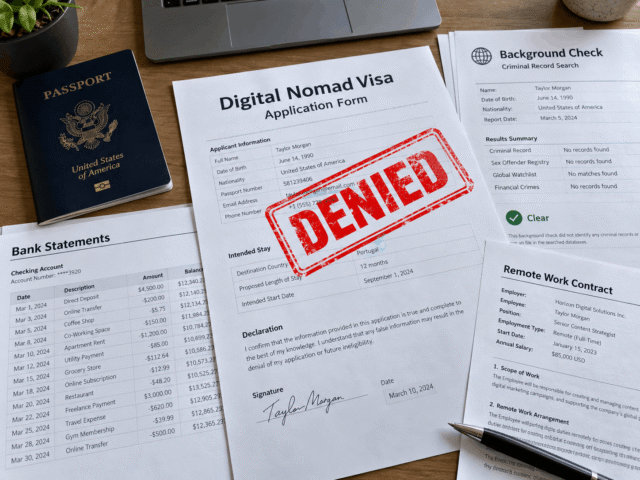
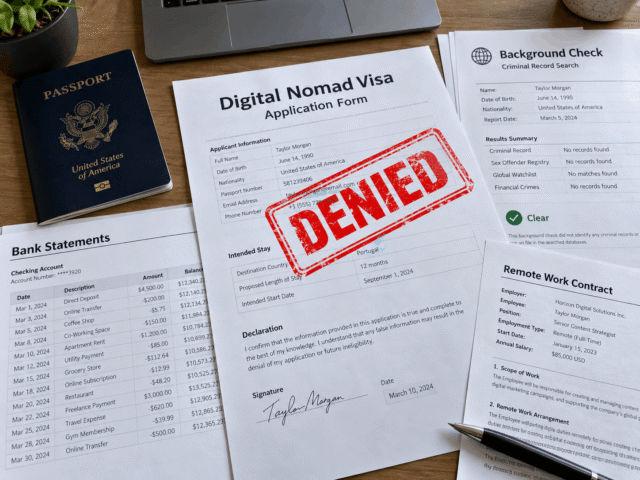
Digital nomad visa applications get rejected most commonly because the applicant does not meet the income requirement, submits incomplete or incorrect documents, cannot sufficiently prove remote employment, has issues with their criminal background check or insurance, or applies under the wrong eligibility category.
Just because you meet the income requirement for the last two months and have a remote work contract with your employer does not automatically grant approval for your digital nomad visa. The visa application process is much more intense than proving your digital nomad status. And to make things even more complicated, every country offering a digital nomad visa has its own eligibility requirements.
By the end of this article, you will understand why many digital nomad visa applications get rejected and what you can do to prevent it. Plus, we’re sharing practical ways to check your visa eligibility and the secret to ensuring a compliant visa application.
Can a Digital Nomad Visa Application Be Rejected?
Yes, your digital nomad visa application can be rejected by immigration authorities for many reasons. It could be that you don’t meet the eligibility requirements, you’re missing important documentation, or there are other issues. In some cases, the immigration authorities may delay the decision and request additional documentation to further examine your application.
Is a Visa Rejection the Same as a Request for More Documents?
If you receive a request from the immigration authorities for additional documents, it does not mean your application was rejected. It simply means they need more proof that you are eligible for the digital nomad visa.
In fact, it could actually be good news. Rather than rejecting the visa application right away, authorities are asking for more documentation to make a final decision. Submitting these documents could save your digital nomad visa from rejection!

Common Reasons Digital Nomad Visa Applications Get Rejected
Before you submit your digital nomad visa application, it’s helpful to understand the common reasons why these applications are rejected. The more you know, the better you can avoid making digital nomad visa application mistakes.
1. You Do Not Meet the Minimum Income Requirement
A major eligibility factor for digital nomad visas is income. Each country sets the minimum income requirement for eligible applicants to ensure they can afford to live comfortably and not put a strain on the government’s social resources. Some countries have a fixed threshold while others tie the income requirement to the national minimum wage, which can fluctuate each year.
These minimum income requirements can be monthly or annual. However, it’s important to determine whether this income is gross or net. Your income may meet the requirement before taxes (gross), but if the requirement is for net income, then you wouldn’t qualify. This distinction is extremely important when determining your eligibility.
In some cases, the income requirement can be a set amount in a savings account, as in Brazil and Croatia.
2. You Cannot Properly Prove Your Income
On top of meeting the income requirement, you must also prove your income. Required documents may include a remote work contract stating your income, invoices, tax records, payslips, and bank statements.
Some of the most common issues for digital nomad visa application rejection when proving income include:
You can read more in our guide, How to Prove Your Income for a Digital Nomad Visa.
3. You Cannot Prove That You Work Remotely
The entire goal of a digital nomad visa is to allow remote workers to live abroad. So, if you cannot provide supporting documents to prove that you work remotely, then it could lead to your digital nomad visa application being rejected.
Basically, your proof of remote work should show that you are able to carry your work out from anywhere in the world and that you serve clients or a business established outside of the country where you plan to hold a digital nomad visa.
Common digital nomad visa application documents to prove remote work include:
- Employment agreement
- Employer letter
- Freelance contracts
- Company ownership documents
- Client agreements
The key here is to make sure these documents explicitly say that you can work remotely, especially if you’re employed by a company.
4. Your Application Is Missing Documents
Digital nomad visa applications often require a packet full of documents proving your eligibility. Often, this includes a copy of your passport, bank statements, a background check, proof of remote work, international health insurance, photographs, and the digital nomad visa application form. If any of these are missing, it could result in a rejected application—or they may reach out to request them, if you’re lucky.
One of the easiest ways to avoid a digital nomad visa rejection is to use a country-specific document checklist rather than a generic visa checklist. You can review our digital nomad visa guides to see exactly what documents you need to submit.
5. Your Documents Are Not Apostilled, Legalized, or Translated Correctly
Sometimes you need more than a printed document—you need it legally recognized and translated. That usually means getting an apostille (if the document originates in a country that is part of the Hague Convention) so it’s valid for use abroad.
If your country cannot issue an apostille, you may need to go to the embassy or consulate of the country you want to apply for the digital nomad visa to have it legalized.
The most common documents that require an apostille include:
- Background checks
- Marriage certificates
- Birth certificates
- Adoption certificates
Most countries also require documents to be translated. For example, Spain requires certified Spanish translations for most documents.
Always double-check with the consulate about document requirements before submitting your application.
6. Your Criminal Background Check Does Not Meet Requirements
Many digital nomad visa applications request a criminal background check from your country of residence or the countries you’ve lived in the last five years. However, this is where many applicants make mistakes and get rejected.
Common mistakes when submitting a criminal background check for a digital nomad visa include:
Important: Just because you may have a history on your criminal background check does not always disqualify you from getting a digital nomad visa. Check the country’s eligibility requirements beforehand. Some digital nomad visas do not require a background check, too.
If you need a criminal background check from the USA, check out our guides How to Get an FBI Background Check from Abroad and Obtaining a Criminal Background Check for Digital Nomad Visas next.
7. Your Health Insurance Does Not Meet Visa Requirements
Most digital nomad visa applications require you to have international health insurance that covers you for the duration of the visa in the country where you plan to live. For example, Portugal requires applicants to have at least 30,000€ in coverage for medical treatments.
Now, it’s important to understand that this is not standard travel insurance—it’s comprehensive international health insurance. That means it covers routine medical care, preventative exams, and emergency treatments. That can also include maternity care and mental health treatments.
Before purchasing an international health insurance policy (we recommend Genki Native or Safetywing Complete), review the requirements for the digital nomad visa application.
And if you still aren’t sure of the difference between insurance policies, check out our post Travel Insurance vs. International Health Insurance for Digital Nomads.
8. Information in Your Application Does Not Match Your Documents
If there are discrepancies between your application and the supporting documents, it could lead to your digital nomad visa application getting rejected. The information must be consistent across all of your paperwork, telling one consistent story.
Examples of when the information may differ include:
9. You Applied for a Visa You Don’t Actually Qualify For
The best way to prevent your digital nomad visa application from being rejected is to verify your eligibility before applying. That means reviewing the requirements and making sure that you meet each and every one. This will save you hours of time and money gathering documents and submitting an application for a visa you aren’t eligible for.
Common reasons for applicants not qualifying for a digital nomad visa include:
You can use Nomads Embassy’s free eligibility assessments to see if you qualify for your digital nomad visa choice.
10. You Did Not Follow the Correct Application Procedure
Each digital nomad visa application has a unique process that each applicant must follow; otherwise, it could lead to rejection.
For example, some digital nomad visas, such as Portugal and Italy, require you to submit your application to a consulate or visa office located in your country of residence. You cannot apply from abroad or from within the country as a tourist. Meanwhile, Spain and Croatia do allow in-country applications.
Other procedural mistakes that lead to rejection include:
You can always review the digital nomad visa application guides on Nomads Embassy for an idea of how to correctly submit your application.
What Happens if Your Digital Nomad Visa Is Rejected?
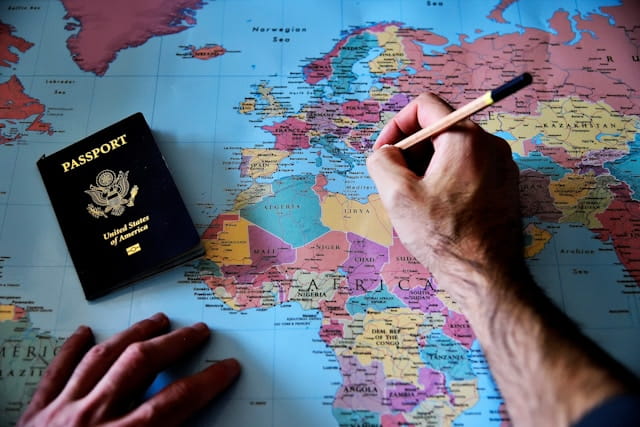
If your digital nomad visa is rejected, you will receive a letter or email stating that the application was denied. Some authorities may provide a reason, but not always.
Depending on the country you’re applying to, you may be able to resubmit your application with updated or corrected documents or request consideration or an appeal of the decision.
If your application was rejected and you applied on your own, you may want to consider working with an immigration lawyer if you decide to resubmit it. They can ensure your application is compliant with the document requirements and procedure.
How to Reduce the Risk of a Digital Nomad Visa Rejection
There are a few things that you can do to reduce your risk of a digital nomad visa rejection.
- Confirm you meet the eligibility requirements.
- Verify the current income threshold.
- Collect country-specific documents.
- Check apostille and translation requirements.
- Make sure financial information is consistent.
- Verify your insurance policy meets immigration requirements.
- Review every application field against supporting documents.
- Apply through the correct embassy, consulate, or immigration authority.
- Keep copies of everything submitted.
- Get professional assistance if your circumstances are complicated.
Get Help With Your Digital Nomad Visa Application
While it is possible to apply for a digital nomad visa on your own and receive approval, it could increase your risk of rejection. That’s why so many digital nomads choose to work with an immigration lawyer to help them prepare and submit their visa applications.
At Nomads Embassy, we work with hand-selected immigration lawyers to help our members submit 100% compliant digital nomad visa applications. They verify your eligibility before working on your application and review documents to ensure they meet the consulate’s requirements.
To see which digital nomad visas you qualify for, check out our free assessments today!